

A larger body generally burns more calories than a smaller one, both at rest and during activities such as walking. More tissue needs energy to function, and moving a heavier body usually requires more energy.
That relationship is easiest to see when comparing people of similar age and height doing the same activity. Across two very different people, weight alone cannot tell you who burns more over a full day. A smaller person who spends hours moving may use more energy than a larger person who is mostly seated.
Your Body Burns Calories Even at Rest
View this post on Instagram
Your heart keeps beating, your lungs keep working and your body maintains its temperature while you sit or sleep. The NIDDK explanation of energy metabolism describes how those essential functions use energy even without exercise.
Resting energy expenditure is the energy used under resting conditions. Your total daily expenditure also includes movement and the energy needed to process food. A resting-metabolism figure from a calculator therefore does not represent everything you burn during the day.
Body size contributes to resting needs, but the kinds of tissue making up that weight matter too. Two people at the same weight can have different amounts of muscle, fat and organ tissue, so their resting expenditure will not necessarily match.
The Same Walk Usually Uses More Energy at a Higher Body Weight

The CDC tables for common physical activities give calorie estimates for someone weighing 154 pounds, or 70 kilograms. They explicitly note that calorie use will be higher for people who weigh more and lower for people who weigh less.
For walking at 3.5 miles per hour, the table estimates about 140 calories over 30 minutes for that reference weight. It is an approximate value for the stated activity and body weight, rather than a measurement of your own walk.
Moving a 220-pound body uphill generally requires more energy than moving a 140-pound body over the same route at a similar pace. Change the speed, distance or incline, however, and you are comparing a different task.
Higher calorie use during that walk also does not tell you who is fitter. It describes the energy required for the activity, not how easily either person can complete it.
Muscle Contributes, but Organs Use Energy Too
Muscle uses more energy than fat, including at rest. That helps explain why two people with the same scale weight can have different calorie needs.
MedlinePlus cautions against exaggerated claims about muscle and metabolism. Adding a few pounds of muscle generally produces a small increase in resting calorie use. The brain, heart, kidneys, liver and lungs account for much of the energy used when the body is at rest.
Fat-free mass includes more than skeletal muscle. Treating every pound of lean tissue as though it has the same energy requirement oversimplifies the comparison.
For someone trying to change body composition, the separate question is whether muscle can grow while total body weight falls. Our article on building muscle in a calorie deficit examines how training and calorie restriction affect that goal.
Weight Alone Cannot Give You a Daily Calorie Target
A chart based only on body weight leaves out much of the information needed to estimate daily expenditure. The NIDDK lists age, weight, height, metabolism, sex and activity among the factors affecting calorie needs.
Daily movement can differ considerably between two people of the same size. A job spent walking and carrying things involves a different amount of activity from a seated job, even if both people complete the same evening workout.
| Factor | How It Affects the Comparison |
|---|---|
| Body weight | Moving a heavier body generally requires more energy during the same weight-bearing activity. |
| Body composition | Different amounts of muscle, fat and organ tissue affect resting expenditure. |
| Age, height and sex | These are commonly included alongside weight in calorie estimates. |
| Daily activity | Work, walking, household tasks and exercise contribute to the daily total. |
Someone being heavier does not reveal how active they are or what their body composition is. It cannot establish a diagnosis of a slow metabolism either.
Calorie Needs Usually Fall After Weight Loss
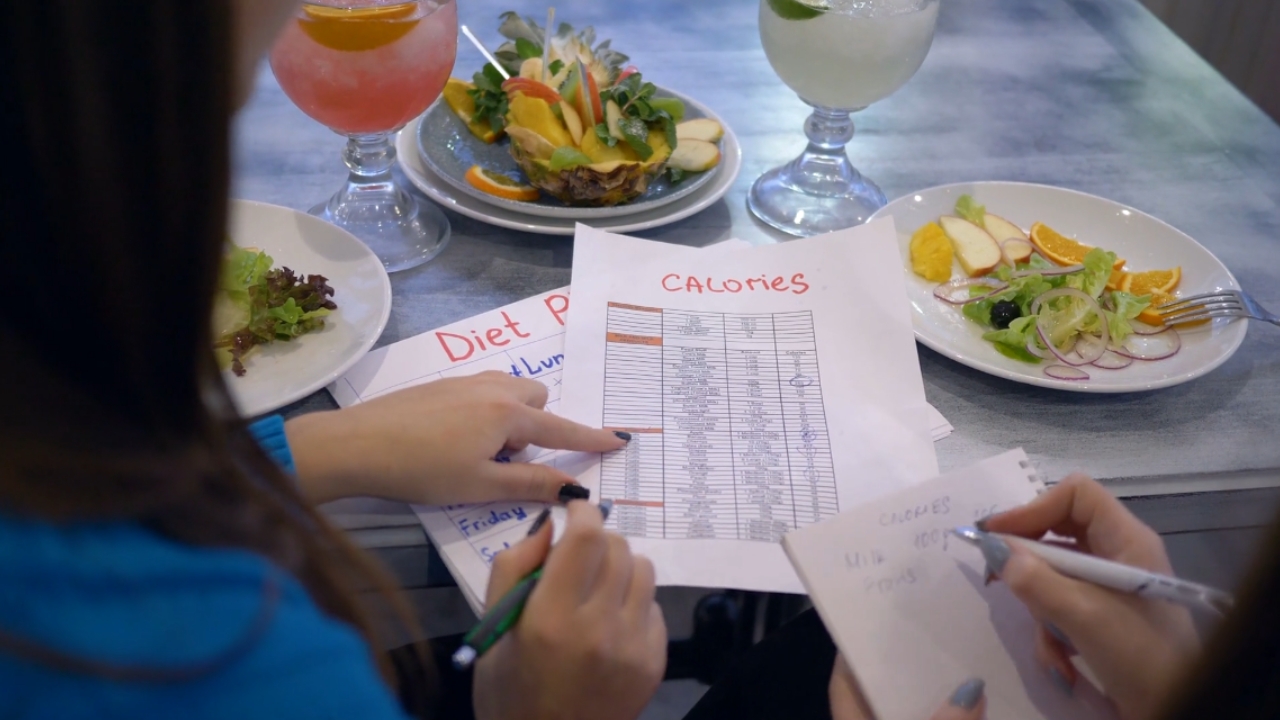
The same relationship works in the other direction during weight loss. As the body becomes smaller, it generally needs less energy. The NIDDK guidance on maintaining weight loss explains that metabolism slows during weight loss and calorie needs are lower at the new weight.
Suppose daily expenditure falls from 2,600 to 2,400 calories while intake stays at 2,100. The calculated deficit falls from 500 to 300 calories. Those are hypothetical figures to show the subtraction, not a prediction of how much your expenditure will change.
Changes in activity can contribute as well. A six-month randomized study of 48 adults with overweight found reductions in free-living activity levels in the calorie-restriction groups without prescribed exercise. The response was not identical across the treatment groups, so reduced movement should not be assumed in everyone who loses weight.
A smaller deficit can help explain slower progress without proving that metabolism is damaged. Our discussion of weight stalls during a calorie deficit covers other reasons an estimated deficit may not match the result on the scale.
Burning More Calories Does Not Guarantee Easier Weight Loss
A person can have relatively high energy needs and still eat enough to meet or exceed them. Expenditure tells you one side of the energy balance. Food and drink provide the other.
For a hypothetical person using 3,000 calories a day, an intake of 3,000 would leave no deficit. A higher calorie requirement does not create weight loss by itself.
Maintaining a lower intake also depends on more than the number in a calculator. The NIDDK overview of factors affecting weight includes sleep, medicines, health conditions, genes and the environments where people live and work.
A comparison between two body sizes cannot tell you how difficult either person finds weight management. Nor does it establish that they should make the same calorie reduction. Our article on how much of a calorie deficit to use shows how the same reduction can leave very different amounts of food.
Calorie Estimates Need to Reflect the Current Body and Routine

A calorie estimate made at a higher starting weight may become less suitable after weight loss. The same applies when activity changes, such as moving from a physically active job to a seated one.
The NIDDK Body Weight Planner estimates calorie and activity changes for reaching and maintaining a goal weight. It is intended for adults age 18 and older, excluding people who are pregnant or breastfeeding, and does not replace individual medical advice.
When reading any calculator result, check whether it describes resting expenditure or the full daily total, and what activity level it assumes. A number based on the wrong routine can be misleading even when your weight, height and age were entered correctly.
Medical disclaimer. This article provides general information about nutrition and metabolism. It does not provide individual medical advice, diagnosis, treatment or a personal diet plan. Consult a qualified healthcare professional about your own health and dietary needs.