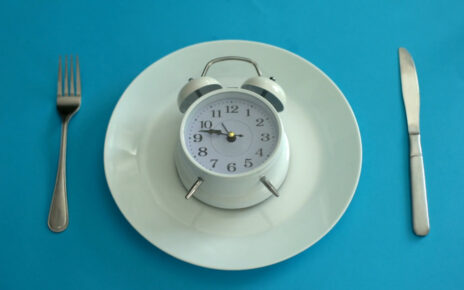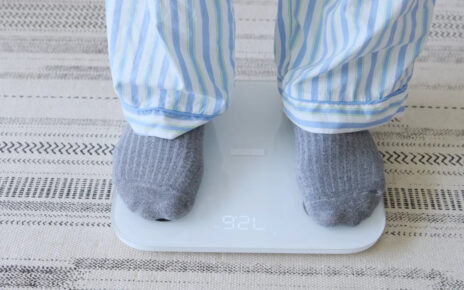

You cut back, you log your meals, and after a few weeks the scale still shows the same number. Why am I not losing weight in a calorie deficit?
My own weight was a long-running frustration, so I know how quickly that question turns into a hunt for some hidden cause. More than once I was sure I had found the answer, then realized weeks later that I had overlooked something ordinary.
In most cases, the explanation is less dramatic than a broken metabolism. The deficit you planned is usually smaller than the deficit you are actually running, and a handful of small leaks can close most of the gap.
A Stalled Deficit Is Usually a Smaller Deficit

A calorie deficit exists only in the gap between what you eat and what your body burns. Both sides of that equation are estimates, and the errors tend to point the same way. Intake gets undercounted, while exercise gets overcounted.
The clearest demonstration is an older one. In a 1992 New England Journal of Medicine study, researchers examined 10 people with obesity who reported failing to lose weight on very low-calorie diets.
Their measured metabolism was close to what was predicted for their body composition. On average, they underreported food intake by about 47 percent and overreported physical activity by about 51 percent.
It was a small group, chosen because they struggled, so those exact percentages do not apply to everyone. I also do not read the result as people lying. Estimating food is hard, which is why I check the boring explanations before the dramatic ones.
Where Calories Slip Past the Food Log
I used to treat the front of a package as the whole story. Now I turn it around before logging anything, because the serving on the label may be smaller than the portion on my plate.
The FDA reminds readers that eating two servings doubles every calorie on the label, which sounds obvious until you pour cereal straight from the box.
Test your knowledge of the Nutrition Facts label, your daily tool for making informed food choices!
Quiz questions highlight information on the label, including calories, % Daily Value, serving size, and nutrients. https://t.co/7tvaN7PZ7A
#NationalNutritionMonth https://t.co/s6Nthle47V
— U.S. FDA (@FDA) March 9, 2023
Most leaks are small enough to dismiss one at a time.
- Cooking oil. One tablespoon of olive oil carries about 119 calories, based on USDA FoodData Central data for olive oil.
- Measuring cups used for dense foods such as peanut butter, rice, and granola, where a heaping scoop is easy to miss.
- Tastes while cooking, bites from someone else’s plate, and crackers eaten standing at the counter.
- Drinks, including coffee creamer, juice, smoothies, and alcohol.
- Restaurant meals logged under the closest generic entry in an app.
Nutrition Labels Are Allowed Some Wiggle Room
Packaged food feels like the safest thing to log because the number is printed right there. The number is real, but it is not precise to the calorie. Federal rules let manufacturers round calories to the nearest 5 up to 50 calories and to the nearest 10 above that, and amounts under 5 calories per serving may be listed as zero.
The same federal labeling regulation, 21 CFR 101.9, treats a food as misbranded when testing finds calories more than 20 percent above the declared value. That is an outer limit for compliance. It does not tell you how far the average product actually lands from its label.
View this post on Instagram
Curiosity: A snack labeled 200 calories could test at 240 and still sit inside that 20 percent limit. Across a day built mostly from packaged foods, small allowances like that can stack up quietly.
Fitness Trackers Guess at Calories Burned

Many people eat back the calories their watch says they burned during a workout. The calorie figure on a wrist device is an estimate built from movement, heart rate, and the profile you entered, and it can miss by a lot.
A Stanford team tested seven wrist-worn devices on 60 adults against laboratory measurements and published their energy expenditure findings in May 2017. None of the devices estimated calories burned within 20 percent. Median errors ranged from about 27 percent for the best device to about 93 percent for the worst.
Watches have changed since 2017, so I would not apply those exact figures to a current model. The basic limitation remains, because a wrist sensor still cannot measure calorie burn directly. A cautious option is to eat back only part of the estimate, or none of it while you troubleshoot a stall.
Your Deficit Shrinks as Your Weight Drops
I liked the tidy weight loss math when I first learned it. Cut 500 calories a day, multiply by seven, and you reach 3,500 calories, or one pound a week, indefinitely. The weak point is the word indefinitely.
A smaller body burns fewer calories, a point I covered in why bigger bodies burn more calories. NIH researchers published a weight change model in The Lancet in 2011, and the NIH announcement of the model said the 3,500-calorie rule overestimates weight loss because it ignores metabolic changes that vary between people.
The NIH rule of thumb is that each permanent cut of 10 calories a day leads to about 1 pound of eventual weight loss. Roughly half of that change arrives within a year, and nearly all of it within about three years.
Read in reverse, each pound lost trims roughly 10 calories a day from your starting deficit.
How a 500-Calorie Deficit Can Shrink
Here is an illustration I put together from the figures above. It is not a record of my diet or anyone else’s, and each leak could happen to a careful person in an ordinary week.
| Item | Calories per day |
| Planned deficit | 500 |
| One tablespoon of olive oil left out of the log | 119 lost |
| A 200-calorie snack testing at the 20 percent limit | 40 lost |
| 400 tracker calories eaten back, real burn 27 percent lower | 108 lost |
| 15 pounds lost since the target was set | 150 lost |
| Deficit left | 83 |
Nobody hits every leak every day, so treat the bottom line as a stress test. Tracker errors can also run in the other direction.
The point is how small items combine, turning a planned 500-calorie deficit into roughly 80 calories, a pace too slow to see through normal daily swings on the scale.
The Scale Can Hide Real Progress for a While
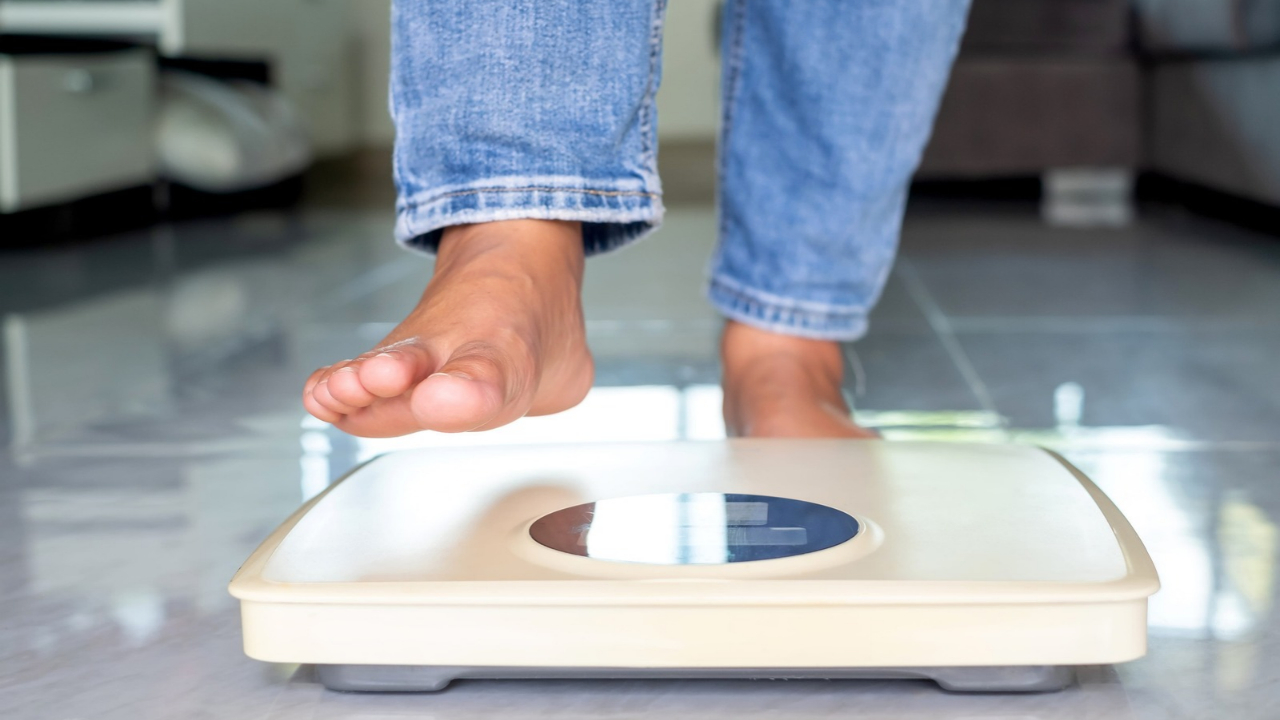
Not every stall is a shrinking deficit. Daily weight moves with water, salt, digestion, and for many women, the menstrual cycle, so one morning on the scale tells you very little.
If you are new to strength training, some fat loss may be partly masked by muscle gain, which I explained when building muscle in a deficit is realistic.
Before deciding that the deficit failed, gather a few weeks of better evidence.
- Compare weekly average weights instead of single mornings.
- Measure your waist at the same spot every two weeks.
- Weigh your food for seven days, oils and drinks included, to see what you are really eating.
Two or three weeks of those numbers will tell you far more than any single weigh-in, and they give you something concrete to compare.
When a Stall Is Worth Raising With a Doctor
Thyroid concerns were part of my own frustration with weight, so I understand why a stall makes people wonder about hormones. The NIDDK notes that weight gain and fatigue are common and do not necessarily mean a thyroid problem, and a diagnosis cannot rest on symptoms alone. Blood tests are how doctors check.
Some medicines can raise appetite or lower calorie burn as well. The NIDDK lists several medicine types linked to weight gain.
- Certain medicines for depression, epilepsy, or psychotic disorders
- Corticosteroids
- Insulin and sulfonylureas for diabetes
- Some blood pressure medicines and some antihistamines
Do not stop a prescribed medicine on your own. Bring the question, and your food log, to your doctor or a registered dietitian.
What to Do Before Changing Your Diet Again

If your weight has been flat for three or four weeks, run a measuring week before trying a new plan. Weigh what you eat for seven days, log every teaspoon of oil and every drink, and skip eating back exercise calories for that stretch.
Then recalculate your target at your current weight with the NIH Body Weight Planner, since the number you picked at the start may no longer fit your body. If that careful week confirms a real deficit and several more weeks still bring no change, take the log to a professional.
You will be walking in with evidence instead of a guess.