

If you’re eating fewer calories than you burn, building muscle sounds impossible. I used to see it that way too: cut to lose fat, eat more to gain muscle, pick one goal at a time.
The more I read, the less tidy that became.
You can build muscle in a calorie deficit, especially if you’re new to lifting, returning after a break, or carrying more body fat. But a deficit still makes growth harder, and the deeper it gets, the worse your odds.
If you’re already lean, have trained seriously for years, and are cutting hard, simply keeping the muscle you have may be the more realistic win.
That’s the distinction I think gets lost in most talk about body recomposition.
Disclaimer: I’m not a doctor or registered dietitian. If you’re already at a very low body-fat level, have a history of restrictive eating, experience menstrual changes, unusual fatigue, persistent digestive symptoms, or have thyroid or other medical concerns, I’d discuss calorie restriction with a qualified clinician.
A calorie deficit doesn’t automatically switch muscle growth off
Your body doesn’t have separate switches for fat loss and muscle growth. A deficit describes total energy balance, but muscle growth also depends on training stimulus, protein intake and stored body fat the body can draw on. Combine those, and fat can fall while lean mass rises.
The famous Twinkie diet experiment is an extreme example of how a calorie deficit can drive weight loss even when food quality is far from ideal.
Research backs this up. In one randomized trial, young men trained hard for four weeks on about 40% fewer calories than they needed. Those eating 2.4 g/kg of protein gained lean mass while losing fat; the 1.2 g/kg group didn’t gain as much.
I’m not recommending a 40% deficit. It was a short, tightly controlled study. But it shows a deficit and muscle gain aren’t biologically incompatible.
A 2026 study adds another angle. Thirty trained adults followed the same lifting program for 10 weeks, eating either at maintenance or 250 calories below, both with 2.5 g/kg of protein. Fat-free mass rose in both groups, and the deficit group lost more fat.
It was small, with only four women, so I wouldn’t make it a rule. But I also wouldn’t say recomposition becomes impossible the moment you drop below maintenance.
Beginners have the biggest advantage

If you’ve only recently started resistance training, your body is being exposed to a strong new stimulus.
That creates an opportunity that someone with five or ten years of serious lifting no longer has to the same degree.
Early in training, you can become stronger quickly and add muscle without having every part of your diet optimized. This is one reason beginners can sometimes lose fat and gain muscle at the same time.
It also explains why two people on the same calorie deficit can get very different results.
Imagine one person has never followed a structured lifting program. Another has trained consistently for six years and is already fairly lean.
The first person has a lot of adaptation available. The second person has already collected much of the easier muscle growth.
Returning to lifting can change the calculation too

There is another group I wouldn’t treat like complete beginners or experienced lifters at their previous peak.
People returning after a long break often regain previously developed strength and muscle faster than they built it the first time.
People usually call this muscle memory.
That doesn’t make nutrition irrelevant. It means the training stimulus is different from trying to build completely new muscle beyond your previous best.
So if you used to train seriously, stopped for months, lost some muscle, and have now returned to lifting while trying to lose fat, some muscle regain during a deficit is much more believable than the same amount of new growth in someone already training near their personal ceiling.
Having more body fat can give you more room to work with
A quick example helps put that idea into context:
View this post on Instagram
I often see people say, “If you have body fat, your body can just burn that and use it to build muscle.”
That explanation is too simple.
Stored fat can contribute energy while you are in a calorie deficit, but muscle growth still depends on resistance training, adequate protein, recovery, and the size of the deficit. Having more stored energy doesn’t guarantee that any particular amount will be routed toward building muscle.
Still, starting body composition does affect what tends to be possible.
Larger bodies also tend to burn more calories each day because there is more tissue to maintain and more mass to move.
The International Society of Sports Nutrition notes that people beginning with more body fat can generally tolerate a more aggressive rate of fat loss, while leaner people benefit from slower weight loss to better preserve lean mass.
That was the idea I used when putting together the table below.
The calorie and protein ranges I would use as a starting point
I wanted a table that reflected something more useful than “eat lots of protein and don’t diet too hard.”
So I separated men and women into broad body-fat categories and then matched those categories with increasingly conservative calorie deficits as body fat gets lower.
This is a guide, not a prescription.
Body-fat measurements themselves have error, and a bathroom bioimpedance scale can give you a number that looks much more exact than it really is. Even research-grade methods have limitations. A 2026 expert review found that measurement reliability varies with the method, equipment, population, and testing conditions.
I also wouldn’t choose someone’s calorie intake from body-fat percentage alone. Training experience, age, current intake, activity, health, dieting history, and actual changes in body weight and performance all belong in the conversation.
| Gender | Body Fat Tier | Body Fat % | Starting Calorie Range vs. Maintenance | Daily Protein Target | Relative Recomp Outlook |
| Men | Essential fat | 2–5% | No planned deficit | 1.2–1.4 g/lb | Very low. Recovery and adequate energy come first |
| Men | Athletic | 6–13% | Around 10–15% below maintenance | 1.0–1.2 g/lb | Lower, especially for experienced lifters |
| Men | Fitness | 14–17% | Around 15–20% below maintenance | 0.9–1.1 g/lb | Moderate, stronger for beginners and returners |
| Men | Acceptable / average | 18–24% | Around 20–25% below maintenance | 0.8–1.0 g/lb | Good opportunity if training provides a new stimulus |
| Men | 25%+ | 25%+ | Up to roughly 25–30% below maintenance in suitable cases | 0.8–0.9 g/lb or based on target weight | Higher opportunity for beginners, but not guaranteed |
| Women | Essential fat | 10–13% | No planned deficit | 1.2–1.4 g/lb | Very low. Adequate energy and health come first |
| Women | Athletic | 14–20% | Around 10–15% below maintenance | 1.0–1.2 g/lb | Lower, especially when already well trained |
| Women | Fitness | 21–24% | Around 15–20% below maintenance | 0.9–1.1 g/lb | Moderate, stronger for beginners and returners |
| Women | Acceptable / average | 25–31% | Around 20–25% below maintenance | 0.8–1.0 g/lb | Good opportunity if training provides a new stimulus |
| Women | 32%+ | 32%+ | Up to roughly 25–30% below maintenance in suitable cases | 0.8–0.9 g/lb or based on target weight | Higher opportunity for beginners, but not guaranteed |
I also wouldn’t deliberately diet someone down toward an “essential fat” number. Those categories are reference points, not goals.
And for someone in a higher-weight body, calculating protein from total body weight can produce an unnecessarily large target. Using goal body weight or estimated lean mass can make more sense.
Why I raised protein as the deficit gets harder
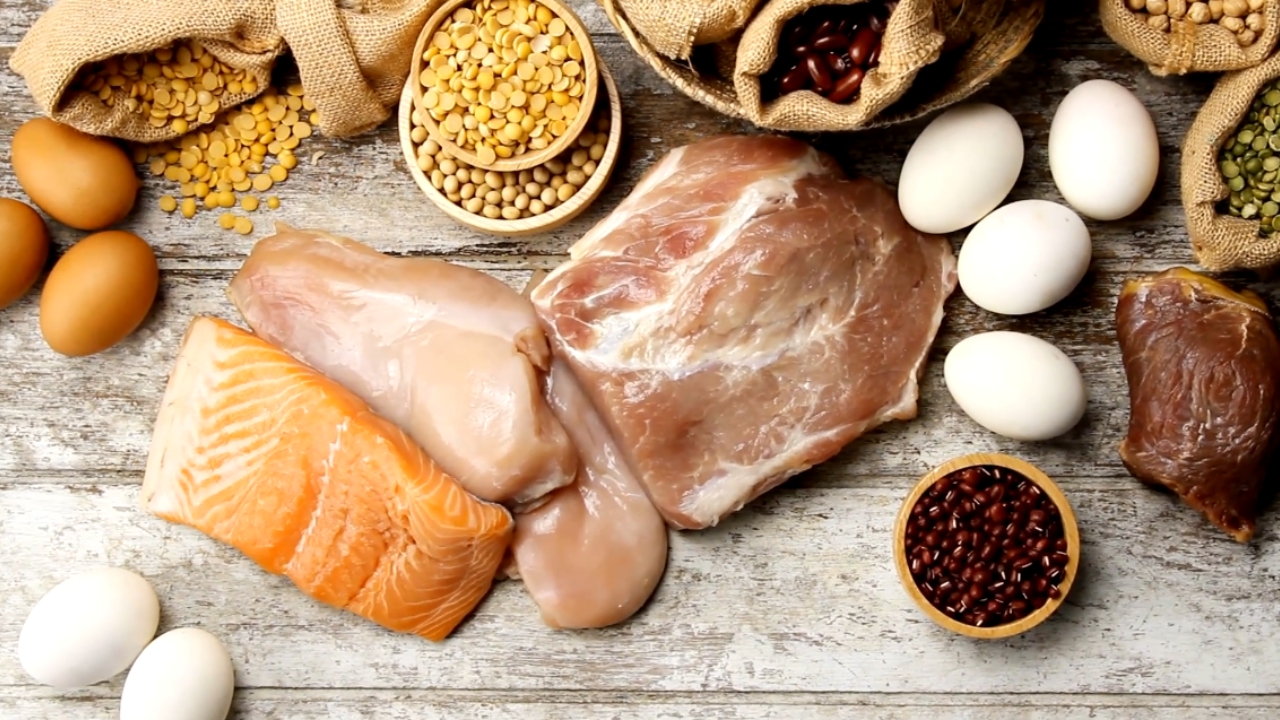
Protein was the part of this table I checked most carefully.
For exercising adults, the International Society of Sports Nutrition suggests about 1.4–2.0 g/kg per day. A large meta-analysis found that around 1.6 g/kg was enough to maximize resistance-training gains for most people who aren’t dieting.
Dieting changes that. A 2025 systematic review of 29 studies on trained people in an energy deficit linked higher protein to more favorable fat-free mass changes, especially at lower body fat. The authors still call the findings exploratory, not a precise prescription.
So I’m comfortable pushing protein higher for a lean person who’s dieting. But more protein doesn’t always mean more muscle. Past a point, you’re adding protein without fixing the bigger problem, which may be an overly large calorie deficit.
Protein can become even harder to prioritize when appetite drops sharply, which is one concern already seen among people using GLP-1 drugs.
The size of the deficit may become the limiting factor
This was probably the clearest pattern I found.
A 2022 meta-analysis compared people doing resistance training in an energy deficit with people doing the same training without one. Two things stood out:
- Lean mass: people in a deficit gained less on average.
- Strength: gains were similar in both groups.
The most useful number came from its meta-regression: a deficit of roughly 500 calories per day was enough to wipe out the average lean-mass gain from resistance training.
Original research dating back to 1958 suggests there are 3,500 calories in a single pound of fat. Because of those estimates, it’s long been believed that if you ate 500 fewer calories every day (adding up to 3,500 fewer calories each week) or burned more than 500 calories a day through exercise, you could lose one pound a week.
But unfortunately, the 500-calorie deficit rule is more of a guideline and not an exact science. Modern research has expanded our understanding of how calories work when it comes to weight management.
That rule tends to overestimate the amount of actual weight loss because there are more things to consider than just calories. Having a deficit of 500 calories every day could work for some people, but it’s not always ideal.
Daily calorie recommendations vary for many reasons. First, everyone processes calories differently.
The percent daily value (%DV) on nutrition labels is also based on a 2,000-calorie daily diet, which, again, isn’t always ideal. Calorie counts on nutrition labels aren’t always exact either, swinging as high as 20% from the actual calories you’re consuming.
Other factors contribute to your ability to lose a single pound of fat, too, including your:
Metabolism
How much muscle you have
Level of physical activity
Body composition
Age
Genetics
Medical history and any chronic health conditionsYou can aim to lose a half a pound to two pounds every week, but how much you lose and how fast you lose can vary. You might not lose any weight for the first couple of weeks, or you could lose it more quickly.
If you’re working on weight management, consider these strategies:
-Focus on balancing your plate
-Prioritize strength training to build muscle
-Set realistic, adjustable goals— Cleveland Clinic (@ClevelandClinic) May 27, 2026
That doesn’t mean 499 calories is a safe cutoff. The number is fuzzy for a few reasons:
- people respond differently
- calorie estimates are imperfect
- the studies included different populations
Still, it gives me a good reason not to tell someone aiming for recomposition to slash calories as low as possible.
My takeaway: if building muscle is genuinely part of the goal, I’d rather leave some energy on the table than chase the fastest fat loss.
When I would expect muscle gain to become much harder
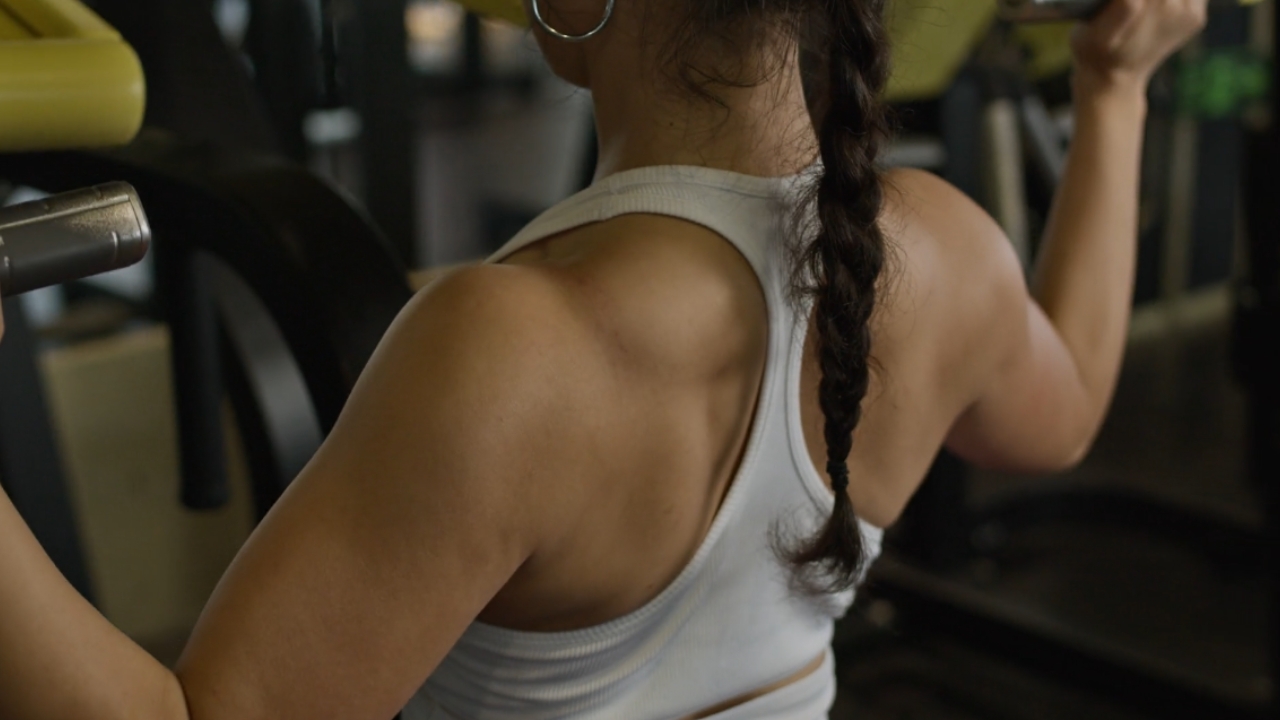
There isn’t one condition that makes recomposition impossible.
It is the combination that starts working against you.
I would lower my expectations considerably if someone is:
- already lean
- highly experienced with resistance training
- eating in a large calorie deficit
- losing weight very quickly
- eating too little protein
- training inconsistently or without progressive resistance
- struggling to recover between sessions
Put several of those together and “gain muscle while losing fat” can become the wrong target.
For a lean, experienced lifter, maintaining almost all existing muscle through a successful fat-loss phase can be an excellent result.
Research on lean physique athletes has reached a similar conclusion. Reviews have recommended relatively slow weight loss, often around 0.5% to 1% of body weight per week, with higher protein intake during calorie restriction to help preserve lean tissue.
There is nothing disappointing about maintenance in that situation. The body is being asked to get lighter while keeping tissue that required years of training to build.
My three-question check for someone trying to recomp

If I were trying to decide how realistic muscle gain is during a deficit, I would start here.
1. How trained are you?
If resistance training is new, newly structured, or returning after a long break, I would be more optimistic.
2. How aggressive is the deficit?
A small deficit gives you a better chance of supporting training and recovery than a crash diet does. If muscle gain is a priority rather than an occasional bonus, maintenance calories may eventually make more sense.
3. Are you actually giving your muscles a reason to stay?
Protein is important, but protein without resistance training isn’t a muscle-building program. Progressive lifting is the signal. Protein and energy help support the response.
That combination is much more useful to me than obsessing over a perfect body-fat percentage.
Sometimes the goal should change from building to preserving
I like the idea of body recomposition because it reminds us that body weight isn’t the whole story.
I just don’t like turning it into another promise.
You may be able to build muscle while eating in a calorie deficit. Your chances are better if training is new or newly resumed, you have more stored body fat, the deficit is controlled, and you eat enough protein.
As you get leaner and more experienced, that window narrows. At some point, keeping the muscle you already built is the win.