When I was younger and trying to make sense of my own weight, bloating, and foods that seemed to disagree with me, I wanted nutrition rules with clean answers. Drink this. Avoid that. Do one small thing and appetite will behave.
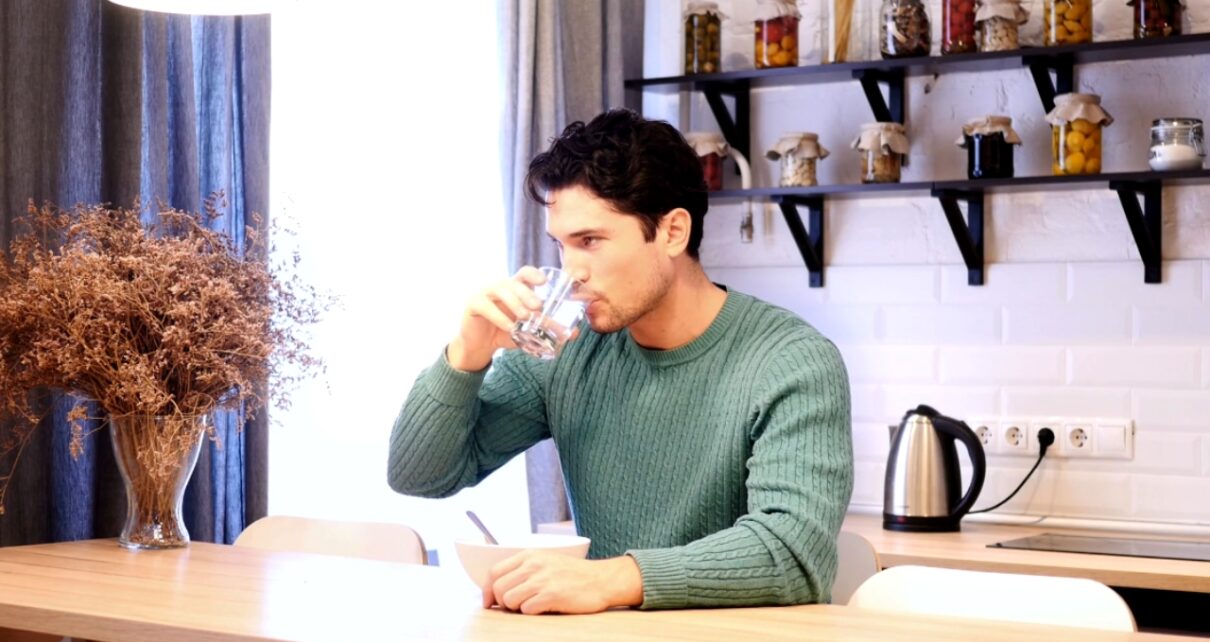
“Drink water with your meal so you fill up faster” is exactly the kind of advice that sounds complete before you examine it.
A new Cornell analysis made me slow down. In 86 adults, more water during lunch was associated with more food eaten, and more switching between bites and sips was linked with more food too.
Interesting, yes. Proof that water causes overeating, no.
The part that changed how I looked at the meal
What caught my attention was how closely the researchers watched people eat. The 2026 Appetite paper pooled two earlier crossover experiments in which 86 adults ate either beef chili or chicken tikka masala with water while their meals were recorded on video.
Researchers counted bites, sips, sip size, drinking rate, and every switch from food to water and back again. That is useful because eating has a rhythm that we rarely describe accurately afterward.
A bite, a sip, another bite can happen without feeling like a deliberate strategy.
Across the meals, greater water intake and more bite-sip switching were associated with greater food intake. The study found a pattern inside controlled meals. It did not assign people to “sip more” and prove what happened because of it.
The 49-calorie number is tempting to misuse
The number most likely to stick in someone’s head is 49 calories. Cornell reported that every additional 3.4 fluid ounces of water consumed was associated with about 1.4 ounces more food, or roughly 49 extra calories. Each additional bite-sip switch was linked with about 0.16 ounces more food.
| What researchers measured | What was associated with it |
| Additional 3.4 fl oz of water | About 1.4 oz more food and roughly 49 more calories |
| One additional bite-sip switch | About 0.16 oz more food |
My instinct with a tidy number like 49 is to resist turning it into arithmetic for real life. I would not multiply it by three meals and seven days. These were associations across specific laboratory meals, not a personal calorie calculator.
The switching may be more interesting than the water
Think about the first few bites of a meal. Taste, texture, smell, and temperature are still very noticeable. As you continue eating the same food, some of that interest normally fades. Researchers call that sensory-specific satiety.
One possibility is that water interrupts the sensory experience enough to make the next bite feel a little fresher. It may also reduce dryness and make eating easier to continue. That could help explain why the back-and-forth pattern matters.
This was not the first time researchers saw it. A 2023 laboratory study using pasta meals found that more switching between bites and sips was related to greater food intake regardless of portion size.
I find that consistency interesting, but I still would not call the mechanism settled. The newer study was not designed to prove why the association occurs.
My history with stomach trouble makes me careful with this
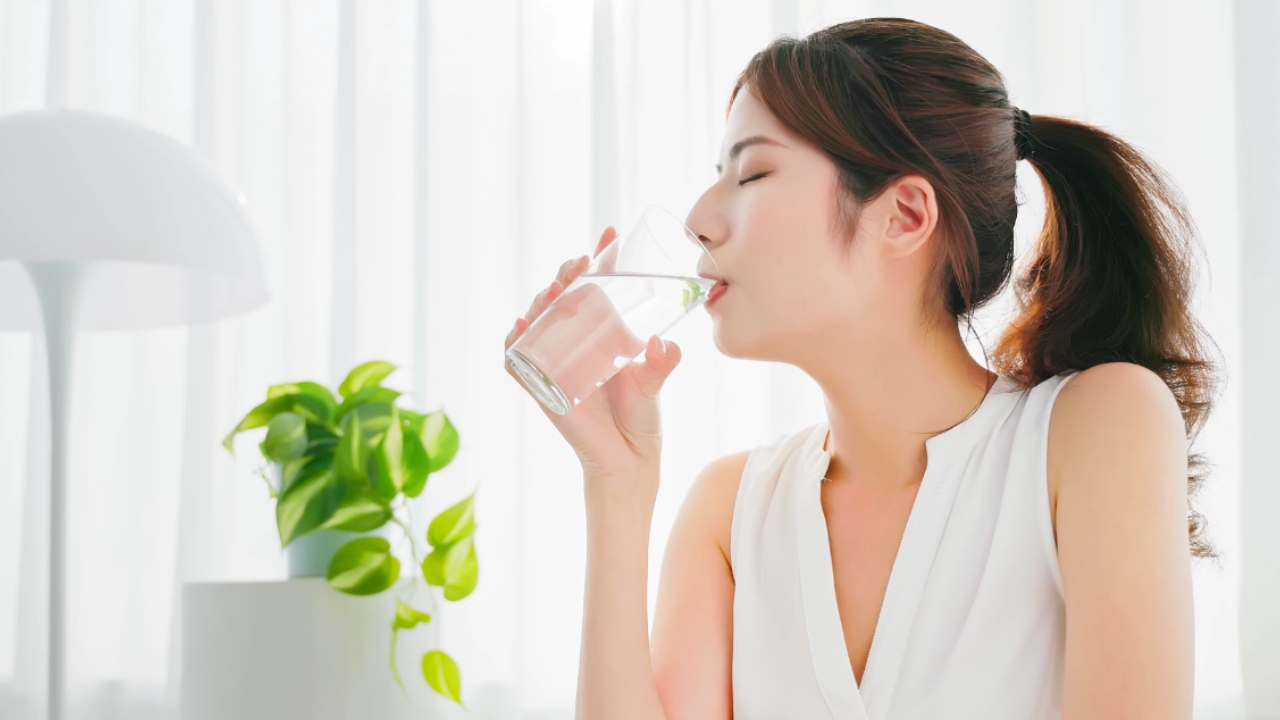
When you have spent years wondering why certain meals leave your stomach uncomfortable, it is easy to build an explanation from whatever happened most recently. My own bloating and digestive trouble are part of why I read nutrition research so cautiously now. A sensation can be real while the explanation attached to it is wrong.
That is why I would not turn this paper into “stop drinking with food.” A 2025 MRI study of 12 people found that 50, 100, and 150 milliliters of water consumed after a light meal usually emptied from the stomach in about 20 minutes.
That helps explain why the picture of water simply sitting in the stomach and keeping it full is incomplete. But gastric emptying is not the same thing as appetite, and neither tells us how much every person should drink with dinner.
Water before a meal gives us a different story
This is where the simple rule really starts falling apart. Research on drinking water before eating has sometimes pointed in the opposite direction.
In a small trial of 24 older adults with overweight or obesity, drinking 500 milliliters of water 30 minutes before breakfast reduced energy intake at that meal by about 13%.
View this post on Instagram
A later 12-week randomized trial involving 84 adults with obesity found preliminary evidence that drinking 500 milliliters before main meals could modestly improve weight loss.
I do not see those studies as a contradiction that needs to be “fixed.” They studied a different behavior. A glass of water half an hour before lunch is not the same exposure as repeatedly alternating bites and sips throughout lunch. Timing, age, meal type, and drinking pattern all change the question being asked.
One awkward finding kept me from making a new rule
There was another result I do not want to bury because it makes the story less neat. Participants who drank water faster actually ate less, not more.
If the explanation were simply “water lubricates food, so more water makes people eat more,” that finding would be inconvenient. The researchers left it unresolved. Cornell reported that it might relate to how long water remains in the mouth, or it might reflect meal duration in some other way.
“This was a secondary analysis looking at associations.”
That sentence from researcher Paige Cunningham is the line I would keep beside the headline. When I was younger and searching for answers about weight and digestion, I wanted every piece to line up. Now I trust the uncertainty more. The team is conducting follow-up work intended to test cause and effect more directly.
I would notice the habit before I tried to control it
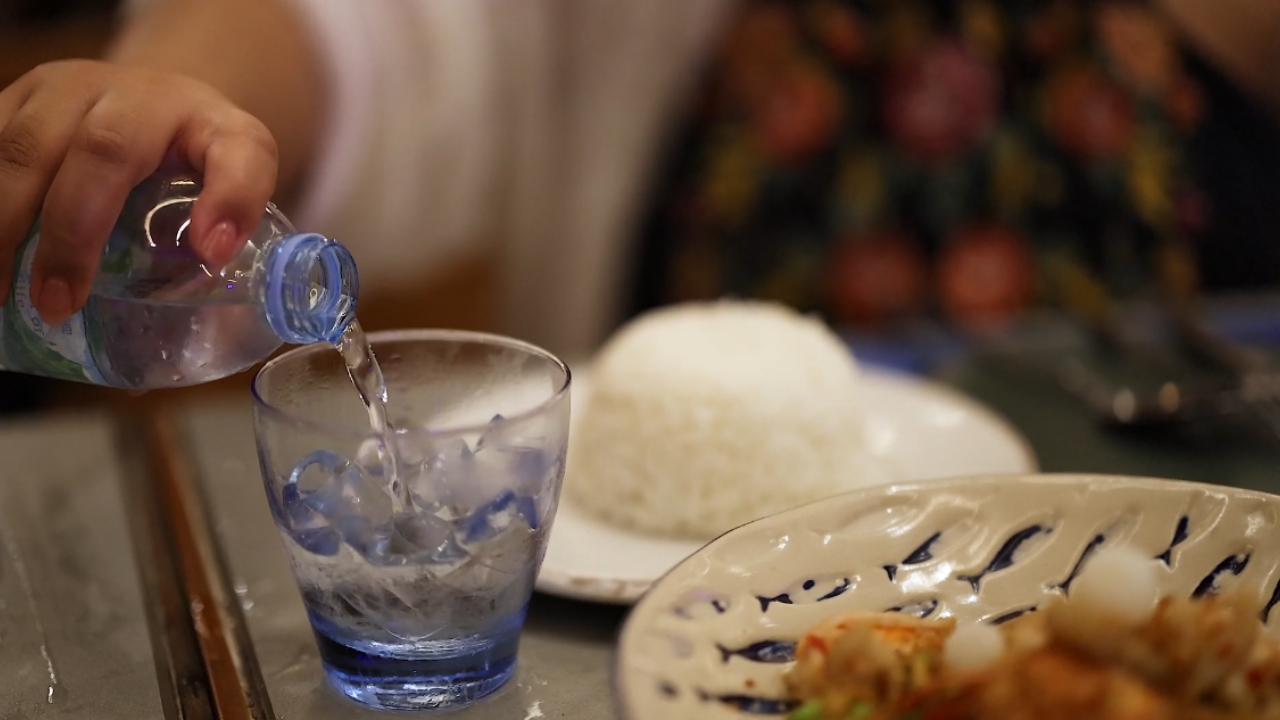
I do not think this research has earned a new rule telling people to stop sipping between bites. It has earned my attention. If you are trying to maintain a calorie deficit, I would look at the whole meal rather than count how many times the glass reaches your mouth.
- Drink when you are thirsty rather than forcing water because you expect it to suppress appetite.
- Notice whether eating and drinking have become an automatic back-and-forth rhythm.
- Keep portion size, eating speed, meal satisfaction, and your overall daily intake in the picture.
Energy balance is larger than one lunch habit. Your needs also change with body size and activity, which is why I have written about why larger bodies generally burn more calories. If you need fluids with meals for dry mouth, medication, swallowing difficulty, or medical advice, this study is not a reason to change that plan.
Frequently asked questions
1. Could the result be different with soup or very moist foods?
Possibly. The meals in the pooled analysis were beef chili and chicken tikka masala. Foods with very different moisture, texture, and eating rates could produce different patterns of drinking and switching.
2. Does this show that people confuse thirst with hunger?
No. That idea was not tested. The researchers measured what happened while adults ate and drank, not whether participants had mistaken thirst signals for hunger before the meal began.
3. Would coffee, tea, or diet soda behave the same way?
We do not know from this research. Flavor, caffeine, sweetness, carbonation, and temperature can all change the drinking experience, so I would not stretch a plain-water study to other beverages.
What I am keeping from this study
@marmunchessupports the transport of hormones, aids in detoxification, and helps regulate body temperature and blood circulation☺️
The part I am keeping is that a habit can shape a meal in ways we barely notice, and a nutrition rule can sound obvious long after the evidence becomes less tidy.
I would still keep water available at a meal. I am simply less comfortable presenting repeated sips between bites as an appetite-control trick.
The 86-person analysis found a relationship worth investigating, not an instruction for how everyone should eat. Until the follow-up experiments tell us more, I would rather understand the pattern than turn it into one more rigid rule about food.