
Monday afternoons were the hardest part. On my first fast day in September, I stood in my kitchen at 3:40 p.m., almost four hours into a 20-hour fast, reading a soup label I had no plan to eat.
By the end of the month, those afternoons felt routine.
An Australian trial published in 2026 found that people who fasted three days a week lost about the same weight as people who cut calories every day. What differed was how the dieting felt.
I tried both approaches back to back with a bathroom scale, a food log and a notebook, and my results lined up with theirs more closely than I expected.
What the Adelaide Trial Actually Tested
The study came from Adelaide University and appeared in the journal Clinical Nutrition, followed by a university news release on June 17, 2026. Researchers followed more than 200 adults with obesity for 18 months and split them into three groups.
| Group | What they ate | Average loss at 6 months |
| Intermittent fasting | 30% of energy needs between 8 a.m. and noon on three nonconsecutive days, then a 20-hour fast, with usual eating on other days | About 15 pounds |
| Calorie restriction | About 70% of energy needs every day | About 15 pounds |
| Standard care | Healthy eating guidelines only | About 4 pounds |
The headline result is a tie at six months. The trial registration on ClinicalTrials.gov adds a detail most coverage skipped. Both diet groups were given meal replacements for the first six months, so nobody was improvising from an empty fridge.
A Different Trial Reached a Different Answer
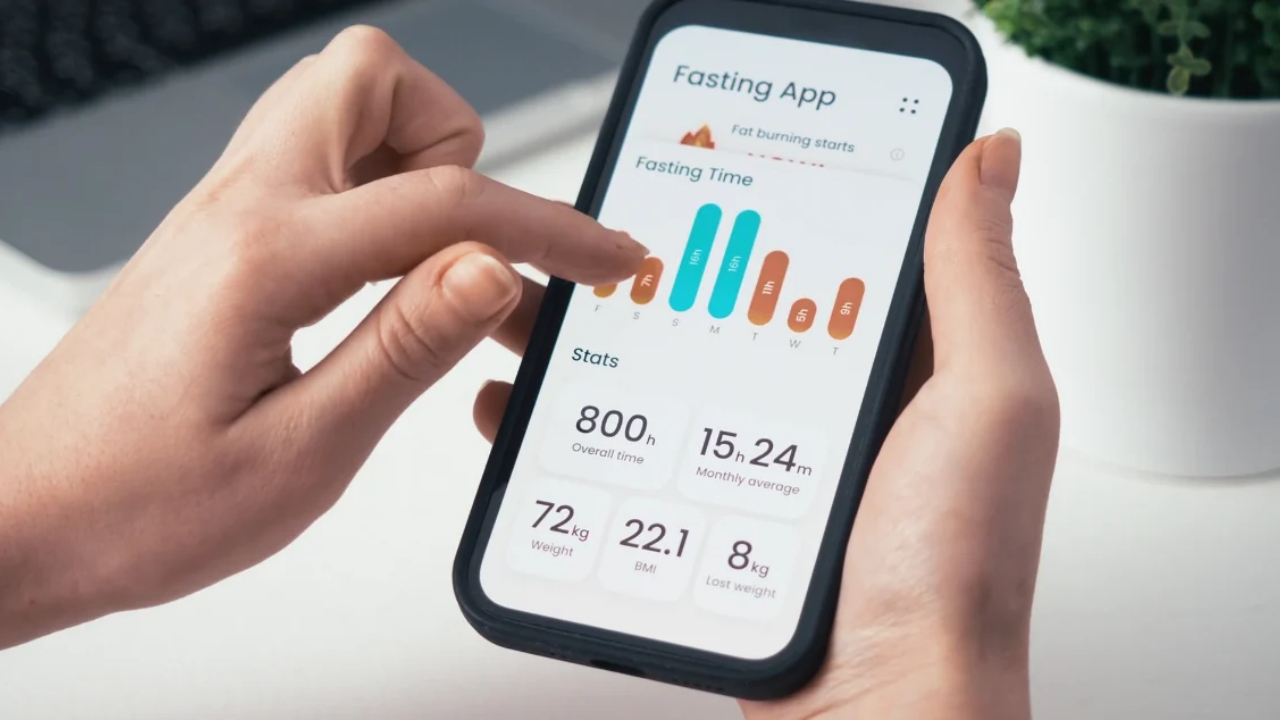
Before accepting the tie, I reopened a study I saved last year.
In March 2025, researchers at the University of Colorado Anschutz Medical Campus reported a 4:3 fasting trial in 165 adults, and their fasting group came out ahead. The interview the university published with the lead researchers lays out the numbers.
In the Colorado trial, the 4:3 fasting group lost an average of 7.6% of body weight after one year, compared with 5% for daily calorie restriction. Fast days meant eating about 20% of usual calories, roughly 400 to 600 calories for women.
So the phrase “no more weight” holds for the Adelaide trial, not for fasting in general. The Colorado volunteers met with dietitians every week, fasted without a morning eating window, and were measured at 12 months.
Two careful trials reached two answers, which leaves the weight question open and the comfort question far more interesting.
A separate Norwegian trial raised another question about diet strategy: can losing weight fast lead to lasting results without greater weight regain? After one year, its rapid-loss group had kept a larger reduction in body weight than the gradual group.
How I Set Up My Own Two-Phase Test
I am 5 feet 11 inches, and in early August I weighed about 152 pounds, a few pounds above where I usually settle. The CDC adult BMI calculator put me near 21. The average Adelaide participant had a BMI near 35, which at my height would mean roughly 250 pounds.
Given my thyroid history, I asked my doctor first. She looked at my recent labs, agreed to a short trial, and told me to stop if I felt dizzy. My rules looked like this.
- Four weeks of calorie counting at 1,400 calories a day, starting August 3
- One week back at my usual eating, around 2,000 calories
- Four weeks of fasting on Mondays, Wednesdays, and Fridays, eating about 600 calories between 8 a.m. and noon
- No counting on non-fast days, only photos of meals
- Morning weigh-ins on the same scale, averaged by week
My Numbers, Week by Week
I kept the setup close to the trial on paper. My estimated maintenance is about 2,000 calories, so 1,400 a day is 70%, and 600 is 30%. Both phases targeted the same weekly gap of 4,200 calories, as long as I ate near maintenance on non-fast days.
Point in the test
Plan
Average morning weight
Start
Usual eating
152.4 lb
Counting, week 4
1,400 calories daily
148.8 lb
Break week
Usual eating
149.0 lb
Fasting, week 4
Three fast days weekly
145.2 lb
Counting took off 3.6 pounds, and fasting took off 3.8. A 0.2-pound difference is noise on any bathroom scale.
Both results fell short of what the math predicted, partly because water shifts early and partly because a lighter body needs less fuel, the same idea behind my piece on why bigger bodies burn more calories.
What a Fast Day Looked Like on My Plate

I front-loaded protein because I did not want the drop on the scale to come from muscle, the worry I dug into when I wrote about building muscle in a calorie deficit.
The numbers below come from my package labels or USDA FoodData Central, and brands vary.
- 8 a.m., two large eggs and one slice of whole-wheat toast, about 225 calories
- 9:30 a.m., 3/4 cup plain nonfat Greek yogurt with 1 cup blueberries, about 185 calories
- 11:30 a.m., 1 ounce of cheddar, about 115 calories
- Coffee with 2 tablespoons of 2% milk, about 15 calories
That added up to roughly 540 calories and about 40 grams of protein. I hit my target on 11 of 12 fast days. The miss was a birthday lunch for a friend, at roughly 820 calories, and I decided that was fine.
Why It Felt Easier for Me
During the counting month, I opened my food app nine or ten times a day. I weighed peanut butter. I built huge raw vegetable bowls for volume, and the afternoon bloating I have known since my twenties came back, which describes my stomach, not a rule about vegetables.
Fasting asked me for three hard decisions a week instead of dozens of small ones every day. On Tuesdays, Thursdays, and weekends, I simply ate dinner. My 4 p.m. hunger notes are less flattering.
Fast-day afternoons averaged 7 out of 10, while counting days averaged 5.
Did you know? The Adelaide researchers estimated that the extra conscious control reported by the calorie-restriction group explained about 15% of the weight that group lost. The fasting group lost a similar amount without relying on that daily effort.
The Catches Hiding in the Same Research
View this post on Instagram
Easier did not mean easy, and the same team has reported details most headlines left out. A 2023 conference summary of this analysis, together with the earlier main paper on the trial, adds three cautions.
- At six months, the calorie group reported less hunger and less disinhibition around food than the fasting group, which matches my 4 p.m. notes.
- By 18 months, a year after diet support ended, neither diet group was clearly ahead of standard care on weight.
- Fatigue reports were higher with fasting, and medical news coverage of the main paper noted that fewer than half of fasters were still following the plan at 18 months, compared with nearly 80% of calorie counters.
For me, those findings narrow the claim. Fasting may feel lighter mentally for some people while still being hungrier and harder to keep.
Who Should Talk to a Doctor First
I would not hand this plan to everyone. People who take insulin or other glucose-lowering drugs can run into low blood sugar on fast days.
Anyone with a history of disordered eating, anyone pregnant or breastfeeding, and anyone already at a low weight should skip fasting experiments unless a clinician says otherwise.
Both trials enrolled adults with excess weight, not people like me at a BMI near 21. The federal guide to choosing a safe weight-loss program recommends talking with a health professional and setting realistic goals before you start.
A note on thyroid questions: Neither fasting nor calorie counting treats a thyroid condition, and my results say nothing about yours. If fatigue or weight changes are part of why you are reading, get tested before you change how you eat.
What I Kept From the Experiment
I finished on October 4 at 145.2 pounds, my usual weight, so the weight part is done.
I am not keeping the full schedule.
I am keeping the habit fasting taught me, which is deciding about food a few times a week instead of renegotiating every snack.
If you want to compare the two plans yourself, clear it with your doctor and track the same four things I did: weekly average weight, 4 p.m. hunger, app check-ins, and missed targets.
Like the keto trial where people lost the same weight but different amounts of liver fat, the scale alone will not tell you which plan suits you.