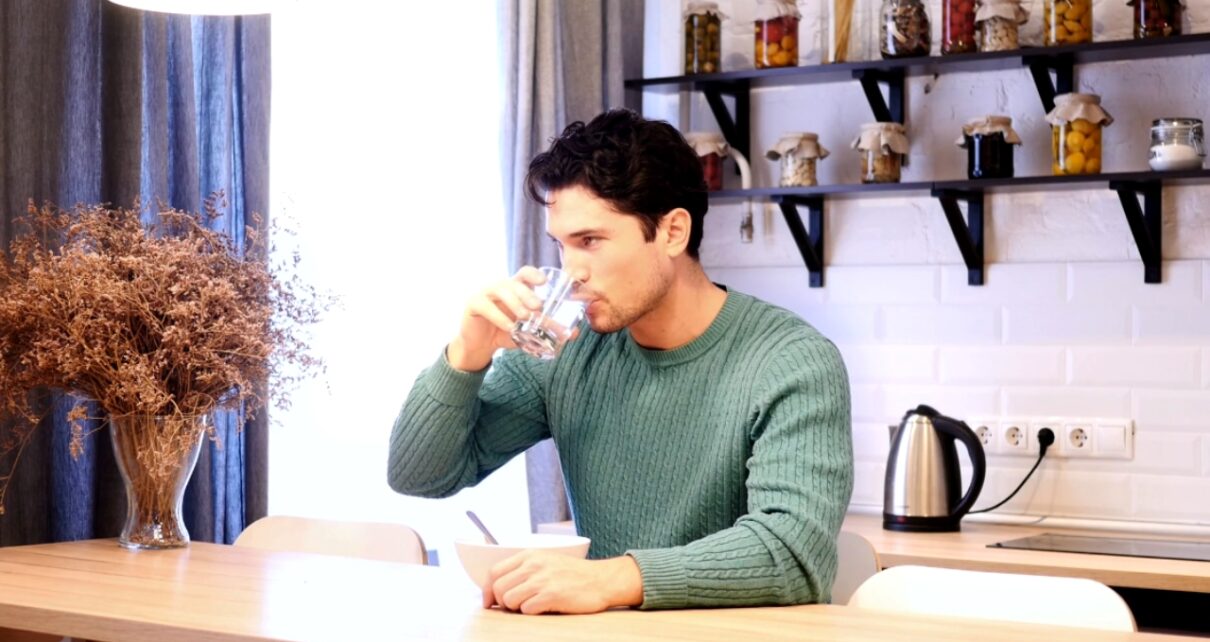
Adults who drank more water during lunch also ate more food in a 2026 analysis of laboratory meals. More frequent switching between bites and sips was associated with greater food intake too. The researchers did not establish that drinking water caused either result.
The distinction matters if you are deciding whether to change a mealtime habit. The findings question the assumption that extra water during a meal will reliably reduce appetite. They do not show that avoiding water will help you eat less.
What the Researchers Measured at Lunch
The 2026 paper in Appetite combined data from two earlier crossover experiments involving 86 adults. Participants ate beef chili or chicken tikka masala with water on two laboratory visits. The original experiments varied the spiciness of the food.
Video recordings allowed researchers to count sips and switches between food and water, along with measuring sip size and drinking rate. Participants could eat as much of the provided meal as they wanted.
Water intake and switching behavior were observed rather than assigned. The randomization in the original experiments therefore does not turn the later water analysis into a trial proving that more drinking produces more eating.
The 49-Calorie Figure Describes an Association
According to the Cornell account of the research, each additional 100 grams of water was associated with about 39 grams more food, equivalent to roughly 49 calories in the meals studied. Each additional switch between bites and sips was associated with about 4.4 grams more food.
| Measure in the 2026 Analysis | Reported Association |
|---|---|
| An additional 100 grams of water, approximately 100 milliliters or 3.4 US fluid ounces | About 39 grams more food, or roughly 49 additional calories in the meals studied |
| An additional switch between bites and sips | About 4.4 grams more food |
The 49 calories were in the food, not the water. Nor was that the amount associated with each individual sip. Multiplying the figure by the number of glasses you drink would not produce a valid estimate of your calorie intake.
Another finding makes the pattern less straightforward. People who drank water faster ate less. The researchers left the explanation unresolved, including whether drinking rate reflected other aspects of the meal, such as its duration.
The analysis concerned specific lunches in a laboratory. It did not measure whether changing drinking habits led to weight loss over subsequent weeks or months.
An Earlier Pasta Study Found a Similar Switching Pattern
The figure in the caption above comes from a separate study published in a 2023 issue of Appetite. In that experiment, 44 adults ate pasta lunches once a week for four weeks. The researchers varied the portion served and recorded eating and drinking behavior.
Across the meals, each additional switch between bites and sips was associated with about 5.7 grams more food. Larger portions also led to greater intake. Switching did not explain away the effect of serving more pasta.
The researchers considered sensory-specific satiety, meaning the decline in how appealing a particular food becomes as you continue eating it. Alternating food and water might affect that experience, but the measured decline in food appeal did not differ with switching.
The earlier study supports investigating the pattern further. It does not establish a simple mechanism in which water resets appetite after every bite, or demonstrate that deliberately reducing switches would reduce intake.
Water Leaving the Stomach Is a Different Question
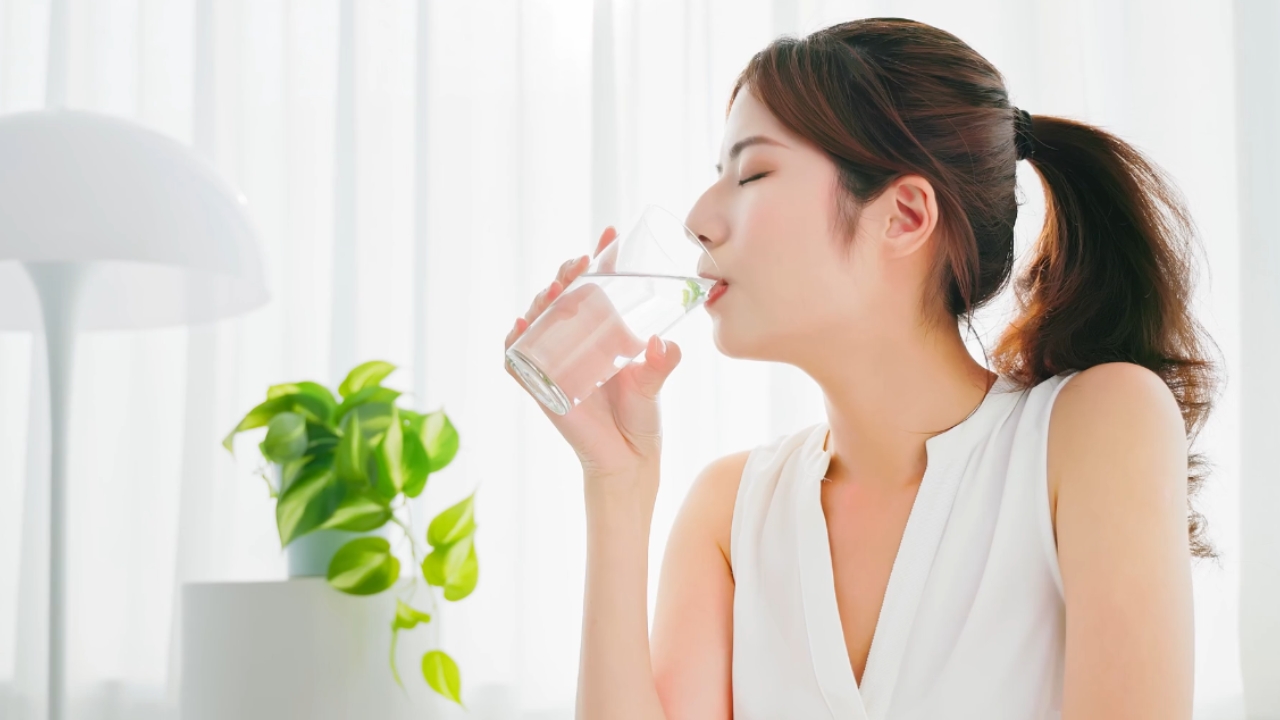
A 2025 MRI study involving 12 volunteers examined what happened to 50, 100 and 150 milliliters of water consumed after a light meal. The water generally emptied from the stomach within about 20 minutes, regardless of the volume tested.
The study investigated gastric emptying and the behavior of oral dosage forms. It was not a trial of appetite control or weight loss. Its findings help explain why water need not remain in the stomach as long as solid food, but cannot tell you whether a glass with dinner will change how much you eat.
Drinking Before a Meal Has Produced Different Results
Water consumed before food is a different intervention from repeatedly alternating bites and sips during a meal.
In a 2008 crossover study of 24 older adults with overweight or obesity, participants drank 500 milliliters of water 30 minutes before breakfast on one visit and had no water preload on another. Average breakfast intake was about 74 calories lower after water, a reduction of roughly 13%.
The finding applies to those participants and that breakfast comparison. It does not establish the same response in younger adults, at every meal, or over an entire day.
View this post on Instagram
A 2015 randomized trial involving 84 adults with obesity tested water preloading over 12 weeks. Both groups received weight-management support. One was also asked to drink 500 milliliters of water 30 minutes before main meals, while the comparison group was asked to imagine feeling full before meals.
The water group lost an average of 1.3 kilograms more in the unadjusted analysis. After adjustment for participant characteristics, the estimated difference was 1.2 kilograms and was no longer statistically significant.
The authors described the evidence as preliminary. Neither that trial nor the breakfast experiment supports a guarantee that drinking water before meals will reduce intake or body weight for every person.
What the Findings Mean for Your Meals
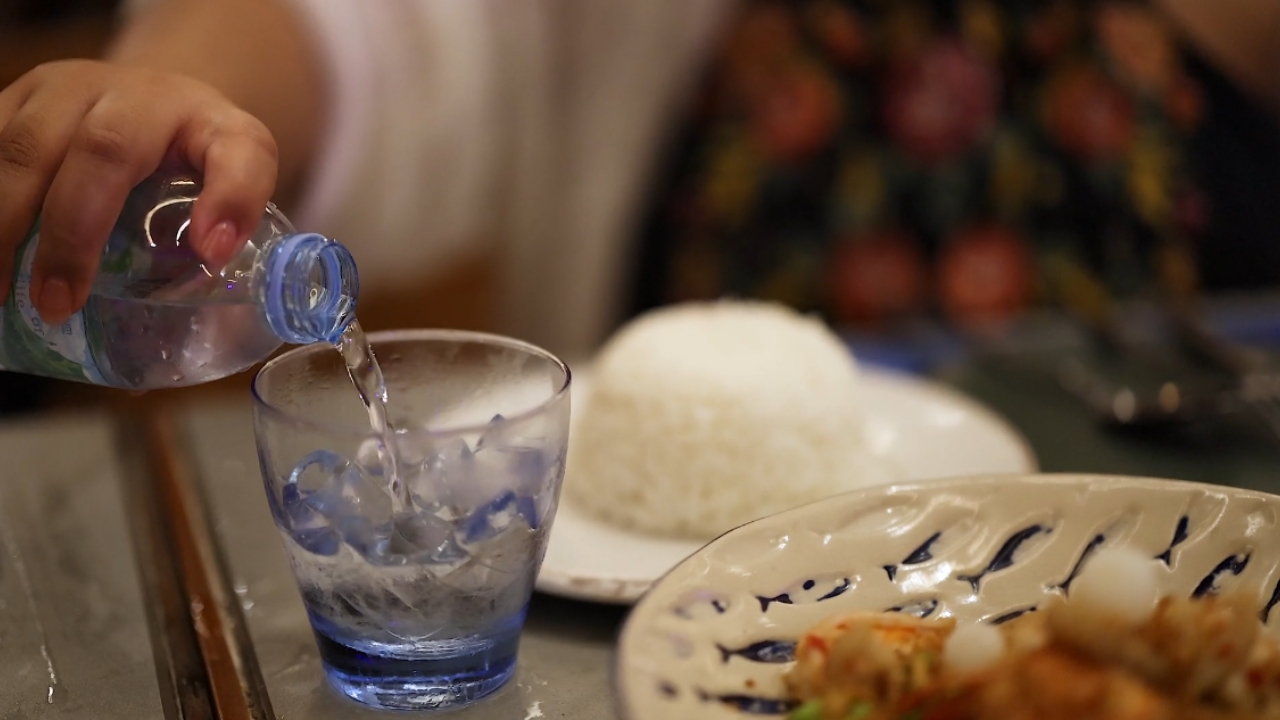
The evidence does not establish a useful number of sips to allow with lunch. It also does not show that coffee, tea, soda or soup would produce the same pattern as plain water alongside the foods tested.
A separate reason to choose water remains straightforward. Water contains no calories, so replacing sugary drinks with water can reduce calories from beverages. That substitution is different from adding extra water to a meal in the hope that it will suppress appetite.
For example, replacing a drink labeled as containing 150 calories with plain water removes those 150 calories from the beverage. It does not establish how much food you will eat afterward or guarantee a particular change in body weight.
If the aim is to understand the calories in lunch, ingredients and serving sizes offer information that counting sips cannot provide. Our article on ingredient changes that reduce meal calories compares changes in food preparation and portions.
The size of an overall reduction is a separate decision. Our explanation of how much of a calorie deficit to use distinguishes the planned reduction from the amount of food remaining.
@marmunchessupports the transport of hormones, aids in detoxification, and helps regulate body temperature and blood circulation☺️♬ sonido original – Tu poeta 🎧
The lunch studies provide no reason to disregard an existing medical fluid plan. For someone with a prescribed fluid restriction or specific instructions about drinking with meals, those individual instructions take priority over an association observed in laboratory lunches.
Medical disclaimer. This article provides general information about nutrition research. It is not a substitute for individual advice from a qualified healthcare professional and does not provide a personal diet or treatment plan.